The Group continuously pursues the reduction of natural resource consumption and emission, and energy conservation. We promote technological innovation, increase the use of clean energy, optimize the structure of resource use, and apply new technologies to intelligently manage construction projects, in order to provide new ideas for a sustainable environmental management.
Promoting the use of clean energy is an important task to improve energy structure, ensure energy security, and promote environmental protection. In response to national policies, the Group vigorously promotes the use of new energy vehicles, and has purchased a large number of new energy equipment such as electric tricycles and LNG vehicles. Moreover, according to the relevant preferential policies introduced by the project companies locally, the Group encourages them to use new energy vehicles in a bid to boost the comprehensive energy transformation and the green and sustainable development of the Group.
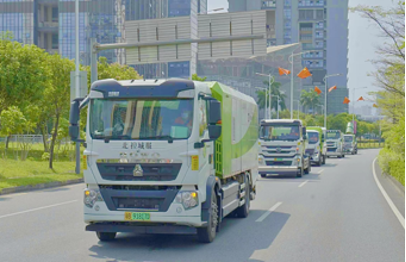
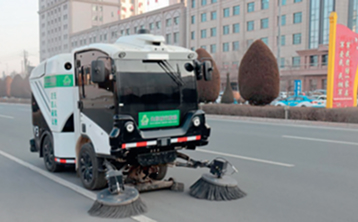
The Shenzhen Bao’an Urban Steward Project is the Group’s first large-scale initiative to deploy new energy vehicles, and embody green environmental principles. Utilizing technologies such as 5G, AI, the IoT, big data, and cloud computing, this project introduces autonomous sanitation vehicles for mechanized cleaning, achieving mechanical operations for 100% of main and secondary roads. The project explores combined operational models, promoting efficient operational transformation while helping realize the goal of “carbon peaking and carbon neutrality”.
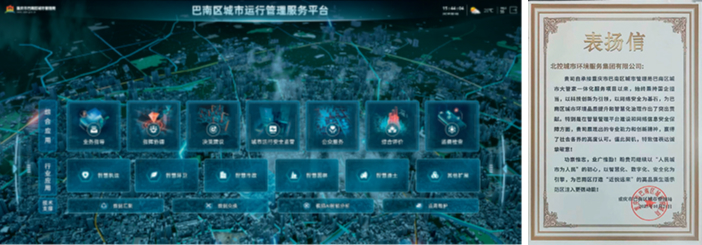
In Chongqing’s Banan District, the Group has continued to enhance the City Operation Management Service Platform. By integrating seven core functions, including command and coordination, operations monitoring, and business guidance, the platform enables efficient, closed-loop management of diverse urban issues such as environmental sanitation and municipal services. A clear architecture underpins the platform’s effective operation. Technologically, it relies on data aggregation and exchange, video AI analytics, and connectivity with IoT devices such as surveillance cameras, forming an intelligent foundation that provides ongoing support for urban governance. At the application level, the platform comprehensively covers environmental sanitation, municipal affairs, parks and landscaping, law enforcement, and construction waste management. Specifically, the Smart Environmental Sanitation system has achieved full online process management of operations, the Smart Municipal Affairs system is operational and being continuously refined, and the Smart Parks and Landscaping system has attained comprehensive coverage of basic static data.
The Group has always upheld its social responsibility and commitment, and operates the project with technological innovation as the guide and cybersecurity as the cornerstone. The project team efficiently drove implementation and stable operations while reinforcing network and data security protections. This has enabled end-to-end smart integration from data to business collaboration, reflecting the deep service commitment of an “Urban Butler.” The success of the smart management platform has gained broad recognition from various sectors and positive media attention. The Urban Management Bureau of Banan District formally commended the Group in writing, recognizing the project’s active contribution in improving the quality of the regional urban environment and advancing smart governance.
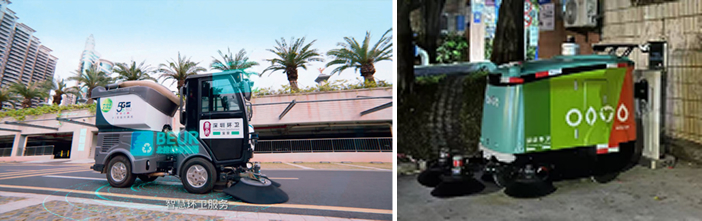
The Group has deepened the full-scenario unmanned operation pilot in the Qianhai area of Nanshan Subdistrict, Shenzhen. Centered around 77 municipal roads in Qianwan and Guiwan communities within the area, it has built an intelligent cleaning system covering 1,792,500 square meters of roads and 1,149,100 square meters of green spaces. To enhance operational efficiency, we ultimately deployed approximately 49 driverless washing and sweeping robots on a large scale, including large, medium and small specifications, forming an efficient intelligent equipment echelon.
We continuously optimized the “scenario-adapted, precision cleaning” model, developing flexible operation methods such as “vehicle-vehicle coordination”, “single-vehicle operation” and “human-vehicle coordination”, establishing an integrated intelligent operation system featuring “human-machine collaboration” covering diverse scenarios such as major municipal roads, auxiliary roads, pedestrian walkways and squares, thereby enhancing safety and adaptability in complex environments. By integrating 5G, AI and IoT technologies, we achieved real-time visual management of the entire sanitation process, reduced manual labor intensity and safety risks.
The Group’s Lintao project company closely followed the governance requirements of integrated smart governance and efficient coordination, taking digital reform as the guide to actively explore the “path of digital intelligence” and establish a comprehensive urban management smart system. We introduced the province’s first fully automatic pure electric large, unmanned sweeper to replace traditional manual cleaning on main roads, and built a smart city management platform to enable real-time monitoring and intelligent dispatching of operational vehicles and waste bin status. Frontline sanitation workers were equipped with smart badges featuring SOS and heart rate monitoring functions. Unmanned aerial vehicles were also deployed for “aerial patrols” to automatically identify nearly 20 types of urban management issues, forming a three-dimensional supervision closed loop.
Through the above measures, we have achieved the mechanized and intelligent upgrading of sanitation operations. The unmanned sweeper has reduced the cleaning time for a single main road from most of a day to 40 minutes, while improving cleaning quality. The smart platform has enabled the timely collection and transportation rate of waste to reach over 98%, with vehicle empty running reduced by approximately 20%. The efficiency of aerial patrols can be more than eight times that of manual patrols, with a cumulative total of 625 issues collaboratively resolved. As a result, the mechanized cleaning rate in the urban area has remained stable at over 96%, the average response time for urban management issues has been shortened by 58% year-on-year, and public satisfaction with the urban environment has consistently remained at a high level of 97.5%.
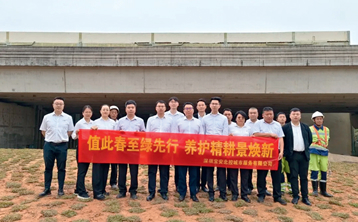
During Arbor Day in March 2025, our Group’s South China region collaborated with government, businesses, and communities to jointly launch a themed tree-planting campaign. We scientifically selected species based on local ecological needs, planting native trees such as camphor trees and golden trumpet trees, as well as flowering shrubs. We organized a vanguard team of Party members from the Baoan project to conduct volunteer maintenance deep within communities, promoting the integration of urban agriculture and ecology. Simultaneously, in Xinqiao Subdistrict, we established a technical system encompassing pruning and shaping, biological pest control, and precise nutrient regulation to scientifically manage and maintain distinctive tree species and seasonal flowers, creating multi-layered landscape corridors. Projects in Longchuan, Xinhui, and Quannan selected tree species for community formation based on site condition analyses, achieving a dual-benefit structure that combines ecological benefits with aesthetic value. Furthermore, we successfully hosted the 35th Annual Conference of the Chinese Society of Landscape Architecture, establishing a collaborative platform for industry, academia, and research, and were consequently awarded the “Special Contribution Award for Urban Management” by the Guangming District People’s Government. This initiative enhanced the ecological connectivity of the green space system, activated the effectiveness of grassroots governance through the “Party Building + Ecology” model, promoted the transformation of urban greening toward multi-stakeholder co-governance, and established a replicable model for ecological service practices.
In Banan District, Chongqing, the Group has helped build an urban management platform, forming a unified and efficient urban service system and truly becoming an “urban butler”. Through real-time data monitoring and analysis, the “urban butler” can accurately allocate resources, quickly respond to urban management needs, standardize sanitation work processes and efficiently handle problems. The platform has aggregated about 94.55 million data resources, operates about 980,000 “urban components”, and connects thousands of IoT devices, giving strong impetus to urban management.
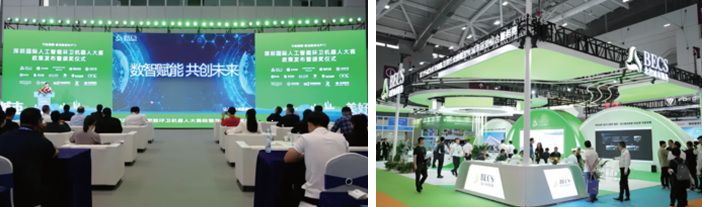
In March 2024, the Group was invited to participate in the Shenzhen (International) City Appearance and Environment Industry Expo, where we showcased our innovative achievements in urban environmental services and advanced practices using digital and intelligent technologies. We shared the advanced experience of the urban butler integrated service model with industry partners, demonstrated urban butler business products created by integrating cutting-edge technologies such as AI intelligent detection inspection and diversified sanitation operation scenario algorithms, and showcased the comprehensive intelligent management of urban sanitation facilities and operation effects.
Climate change has a profound impact on socioeconomic development and business development while changing and affecting the global ecosystem and natural environment. The Group integrates climate change management into the company’s business development through more systematic governance, more comprehensive strategies, more robust risk management, and clearer objectives. This approach aims to effectively adapt to and mitigate the impacts of climate change.
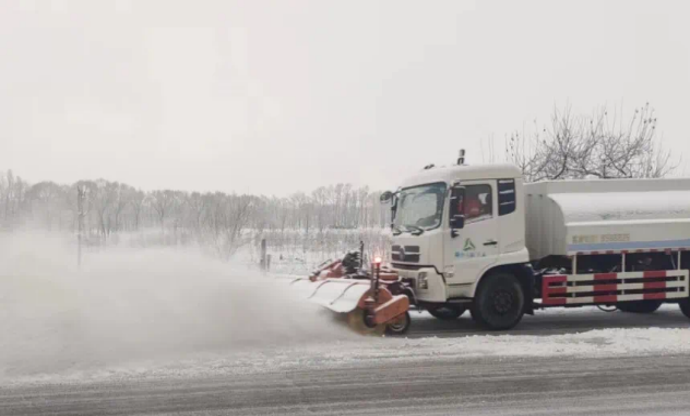
The Group has established a “unified command, standardized and orderly, scientific and efficient” winter snow removal emergency management system, coordinating snow removal preparations and initiating snow removal across all regions and projects. We have strengthened the emergency response to winter snow removal by organizing comprehensive snow removal operation training, compiling detailed operation manuals, and strictly supervising snow removal drills in each project. This ensures that in actual operations, we can “prepare in advance, rehearse in advance, and be in place in advance.” Faced with three major temperature drops in November of 2023 and extreme cold weather in December of 2023, the Group successfully completed snow removal operation tasks across various regions and projects including Beijing, Hebei, Shandong, Inner Mongolia, Shanxi, Shaanxi, Gansu, and Ningxia, earning high praise from local governments.
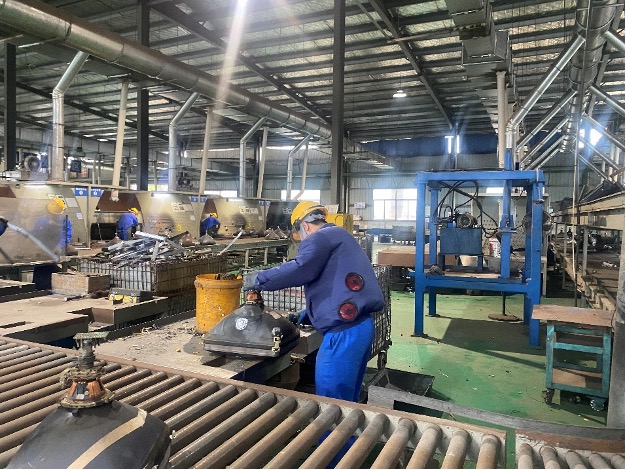
In response to the increasingly severe challenges of climate change, the Group actively upgrades heatstroke prevention and cooling measures, with refined optimization for positions with high physical labour intensity. In the Jiangxi Beikong project, the team paid special attention to the particularities of the disassembly work station. By extending the water-cooled air ducts, the cooling effect was enhanced to ensure that employees remain comfortable in high-temperature environments. At the same time, work hours were flexibly adjusted to avoid peak heat periods, with increased rest times to safeguard employee health and work efficiency. Additionally, we equipped disassembly workers with air-conditioned vests equipped with fans, effectively reducing body surface temperatures and providing a cool working environment, which set a good example for summer heatstroke prevention and cooling efforts.