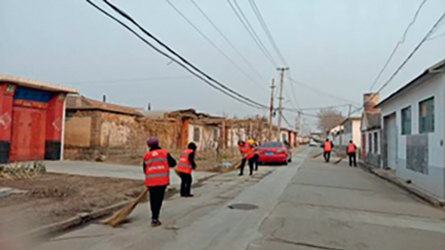
The Longkou Project in the Group’s East China Region, with the value orientation of “making villages more livable and life better”, has implemented systematic environmental improvement initiatives to deepen the national construction practice of “livable, business-friendly, and harmonious and beautiful villages”, and strives to enhance the quality of the rural living environment.
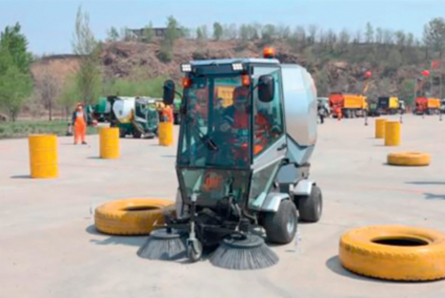
For areas such as narrow village roads, tree pits along roadsides, and areas around trash bins, the sanitation team of the Longkou Project has carried out full-coverage and refined operations, conducting in-depth cleaning. This practice fully highlights the effectiveness of the long-term management and maintenance mechanism in implementation. Through regular and systematic environmental maintenance, it has promoted the transformation of villages from chaos to cleanliness, order, and ecological livability, offering strong support for the development of harmonious and beautiful villages.
By virtue of the continuous operation of the long-term management and maintenance mechanism, the regional environment of the Longkou Project has undergone systematic improvement: the once messy streets now show a neat and orderly scene, the overall rural outlook has been completely refreshed, and a solid foundation has been laid for the achievement of the livable and business-friendly goals.
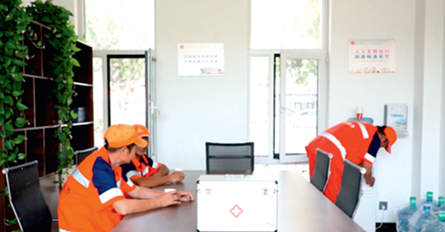
the Group’s Zhangdian Project Company in Shandong, in collaboration with local authorities and philanthropic enterprises, spearheaded the transformation of sanitation “collection points” – the city’s “pollution control hubs” – into “warmth stations.” Adopting a needs-based approach, we established 32 sanitation workers’ rest stations equipped with air conditioning, microwaves, first-aid kits, and other essentials, offering round-the-clock hot water, hot meals, and rest facilities. To address seasonal challenges, we distributed heatstroke prevention supplies to over 2,000 frontline workers in the area. During high-temperature periods, we implemented a “mechanization-first, manual-second” approach, while in winter, we provided over 8,200 sets of cold-weather gear to ensure employees could stay warm. Additionally, we established “Community Service Stations” offering health consultations and complimentary haircuts, organized “Sanitation Workers’ Day” events to recognize outstanding contributors.
The Group continues to provide comfortable rest areas for sanitation workers. Through a series of services and activities, it has inspired employee enthusiasm, conveyed the city’s warmth, enhanced professional dignity and social recognition, and successfully transformed from a “pollution control hub” into a “warm-hearted station.”
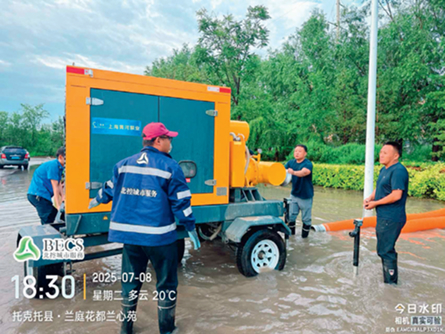
In July 2025, during the critical phase of flood prevention and control in Tuoketuo County, the Group actively responded to the local government’s call and deepened the government-enterprise coordination mechanism. We immediately mobilized all employees at the Tuoketuo project to join the front lines of emergency rescue and disaster relief. The Group’s trade union also urgently allocated flood control supplies, providing 320 raincoats to the project. This supported the orderly conduct of emergency rescue operations and effectively safeguarded flood control safety.
We successfully launched two phases of a nationwide corporate culture campaign involving top-down and bottom-up collaboration, enhancing all employees’ sense of participation and cultural identity. The first phase was held during the May Day Labor Day and May Fourth Youth Day holidays, centered on the theme “Labor Builds Dreams and Achieves Excellence; Youth Strives Forward and Demonstrates Responsibility. “We coordinated efforts across seven regions nationwide to organize selections for Model Workers and Youth Pioneers, honoring a total of 113 May Day Model Workers and 49 Youth Pioneers. Concurrently, local project companies conducted diverse activities such as frontline employee visits, skills competitions, youth forums, and public sanitation volunteer services. This ensured high-level participation from management to frontline staff, significantly strengthening the organization’s cultural awareness.
The second phase of activities, themed “Saluting Urban Beauticians, building a Clean and Happy Home Together,” was launched simultaneously across nearly 100 project companies nationwide. In collaboration with local subdistricts, trade unions, and other organizations, we jointly organized themed events for Sanitation Workers’ Day, featuring public health checkups, professional skills competitions, and commendations for outstanding performers. These activities not only promoted a social ethos of respecting labor and caring for frontline employees but also profoundly demonstrated our Group’s sense of responsibility as urban service providers.
Shiny Glory Services (Hong Kong) Limited, a subsidiary of the Group, upholds its mission as a responsible enterprise and continuously encourages employees and stakeholders to participate in community development. It takes pride in serving the community and strengthening social connections, fulfilling its responsibilities through diversified forms such as public fundraising, targeted donations, and volunteer services. In 2025, we organized employees to participate in 24-hour volunteer service and donated approximately HKD6,400 to the community. Based on its sustained commitment to the community, employee well-being, and the environment, it has been awarded the “Caring Company” Award by the Hong Kong Council of Social Service since 2007.
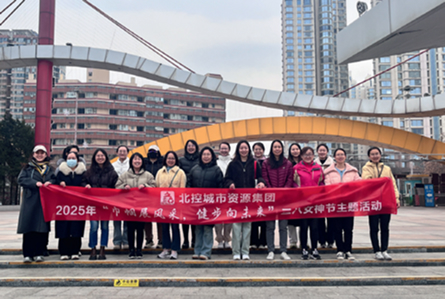
We actively organized cultural and sports activities to strengthen employee cohesion. In March 2025, to honor female employees’ contributions to the Group’s development and enrich their spiritual and cultural lives, the Group organized a walking event at Beijing Chaoyang Park. Through outdoor exercise, participants relieved mental and physical stress and improved their physical fitness, while simultaneously igniting enthusiasm for excellence in their roles and fostering innovation, thereby uniting female employees in their commitment to high-quality development.
In April 2025, to strengthen strategic synergy between our Group and Beijing Chaoyang Environmental Group, the two parties jointly hosted a friendly basketball match. On the court, players demonstrated a fighting spirit and teamwork; off the court, they fostered mutual trust and consensus through interaction. This event used sports and cultural activities to reinforce cooperative relationships, effectively enhancing team collaboration and laying a solid foundation for long-term cooperation.
Through continuous refinement of our human resources management system, the Group has advanced the digital transformation of talent management and deepened the professional development of our HR management team. Thanks to our sustained investment in talent development, we were honored with the “2025 Best Employer Brand” award at the 16th China HR Expo and the “2025 China Employer of the Year – Best Employer Nomination Award” presented by Zhaopin.
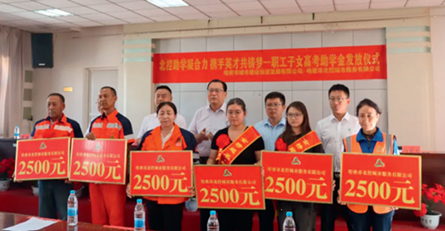
In August 2025, the Hami Project of the Group held the scholarship award ceremony for employees’ children who had taken the national college entrance examination, themed “Beijing Enterprises Student Assistance Unites Strength, Nurturing Talents to Fulfill Dreams”. A total of 107 beneficiary students, parent representatives, and employee representatives attended the ceremony. At the event, the project leader reported on the overall situation of employees’ children participating in the 2025 national college entrance examination, and distributed scholarships to the 107 students in turn, with a total donation of RMB139,500. The ceremony included speech sessions where student representatives and parent representatives shared their heartfelt thoughts, expressed gratitude, and conveyed their aspirations. This scholarship program has effectively eased the financial burden on employee families, earned recognition from both employees and their children, demonstrated the Group’s commitment to education and talent development, and fostered a positive public welfare atmosphere of unity and mutual support.
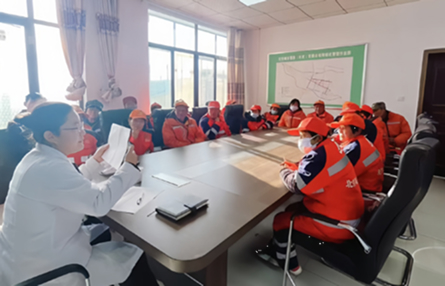
the Group’s Changwu Project Company conducted special training on disease prevention knowledge and blood pressure measurement activities to reduce the high risk of cardiovascular and cerebrovascular diseases among employees during the winter season. We invited professional doctors to give on-site lectures on the prevention of hypertension, myocardial infarction, cerebral infarction and other diseases to all drivers and employees over the age of 60, popularized emergency response skills, and provided free blood pressure testing services to all employees, thereby strengthening their awareness of personal health management.
The Group participated in the third “10+N” City Management Bureau Chiefs Joint Conference, where we presented our practices and insights in urban environmental services to over 50 directors of city management departments and industry experts from 18 provinces and municipalities across China. Our representative delivered a keynote speech titled “Thoughts and Practices on High-Quality Development in Market-Based Environmental Services.” The address analyzed the current state and future direction of the industry, and detailed our practical approach to promoting high-quality development through the “Urban Butler” model. By showcasing a successful project case implemented in Nanjing, we engaged in in-depth exchanges with industry peers.
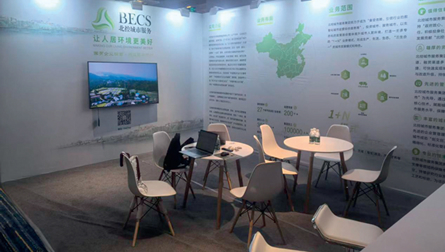
At the 23rd China International Urban Construction Expo, the Group further strengthened industry exchange and brand presence. The Expo centered on the theme “Building Modern, Livable, Beautiful, Resilient, Civilized, and Smart People-Centered Cities.” We maintained a professional booth in the main exhibition hall. Through curated displays and materials, we showcased our explorations and achievements in urban services to officials from the Ministry of Housing and Urban-Rural Development, representatives of local governments, and numerous industry professionals. By taking part in this high-level industry dialogue, which brought together stakeholders from housing and construction authorities, local governments, and leading enterprises, the Group helped advance modern urban service concepts on a national platform. We jointly explored pathways for high-quality urban development, broadening our network and reinforcing collaboration across the industry ecosystem.
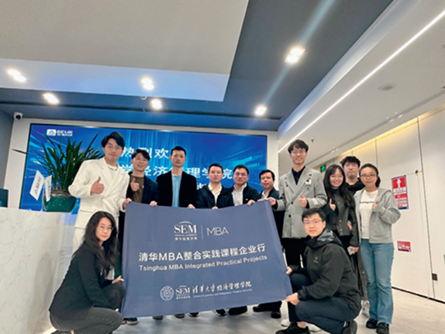
The Group continues to deepen its industry-education collaboration with Tsinghua University’s School of Economics and Management through its Global Master of Business Administration (GMBA) program. within the 2025 Integrated Practice Project (IPP), we worked closely with a Tsinghua student-faculty team to examine the feasibility of commercializing unmanned operation robots in municipal sanitation. This research explores an emerging field and seeks to deliver innovative solutions that can help move beyond traditional urban service models and drive intelligent transformation.
In this collaboration, the Group and the project team, based on industry policies and market realities, focused on the core challenges such as the limited adaptability of unmanned cleaning vehicles in standard road conditions and the unclear cost structure throughout their entire lifecycle. Together, we developed a cost-benefit-based refined operation analysis model. It systematically establishes a lifecycle cost calculation framework covering equipment procurement, infrastructure, energy consumption, and maintenance, built on quantified relationships among environmental parameters, equipment performance, and staffing rules. Using site-specific data and operational efficiency targets, the model can dynamically generate optimized equipment fleet sizing, human-machine collaboration plans, and patrol-cleaning route schedules.
By introducing a dynamic cost-deviation feedback mechanism, the Group and the Tsinghua team conducted multiple rounds of simulation to optimize cost structures, including operational time windows and human-machine ratios. The final output is a closed-loop operational solution designed to lower cost per unit area while raising overall equipment utilization. This joint effort offers a replicable decision-making framework and a risk management plan for expanding the commercial use of unmanned cleaning equipment in smart sanitation scenarios. By addressing both cost control and efficiency enhancement, the project contributes valuable academic insight and practical momentum to the intelligent advancement of urban environmental services.