As part of the greening and conservation work in spring, the Quannan Project of the Group carried out pruning and replanting in a reasonable manner, and implemented greening and conservation on bare land and missing seedling areas. To prevent and comprehensively control plant diseases and insect pests, eco-friendly pesticides were used, and nitrogen, phosphate and potassium fertilizers were applied in a rational manner to provide nutrients required by plants, minimizing the negative impact on the environment, striving to promote diversity and stability of vegetation, and creating a more eco-friendly urban landscape.

The Group actively develops resource-based businesses with the goal of achieving as much progressive sublimation of resource recycling and value re-creation as possible. We uphold the concept of recycling in the hazardous waste treatment and environmental hygiene business, use resource based means, research resource-based methods, and promote the green, sustainable, and refined operation of multiple businesses.
The total processing capacity of all recycling projects of the Group has reached 270,000 tons/year. According to the business licenses obtained by the relevant projects, the design treatment capacity of Ningxia Ruiyuan Branch is 200,000 tons/year, that of Chongqing Branch is 50,000 tons/year, and that of Yichang Branch is 20,000 tons/year.
In 2022, the Yichang Recycling Project was completed and put into operation, with a resource utilization capacity of 20,000 tons/year, of which 15,000 tons/year of organosilicon hydrolysis slag and5,000 tons/year of etching solution wastewater. The project in Yichang Hubei Province, the Branch introduced the organosilicon waste recycling module to create economically advantageous products like copper, silicon powder, ferrous sulfate solution, or ferrous chloride solution, which significantly increased the value attribute of the process tailings, significantly improved the company’s benefits, and supported the sustainable development of the company’s business. The Group’s Yichang Resource Recycling Project has achieved 100%recycling of hazardous waste, without generating secondary hazardous waste.

The Group’s project companies vigorously promoted refined production management, and reduced material consumption by improving packaging methods and recycling bulk bags. In 2023, Weifang Project saved procurement costs of RMB50,000 by cleaning and reusing boxes and bulk bags; Jiangxi Project continued to recycle used items, saving bulk bag procurement costs of RMB90,000 by recycling about 5,000 used bulk bags.
The incineration workshop completed a number of energy-saving and consumption-cutting projects, and the actual consumption of natural gas per ton of products was 3.44 cubic meters per ton, which was only one-third of the expected consumption. By improving packaging methods and recycling jumbo bags, a total of 6,900 ton bags was saved and 11,220 ton bags was reused in 2022. Through the implementation of screen glass packaging improvement, Shaanxi Branch can save 1,500 tons bags and recycle 1,200 tons bags for every 100,000CRT televisions disassembled. Every 100,000 sets of waste air conditioners can save 2,000 tons bags, 1,500 ton bags can be saved for every 100,000 waste refrigerators disassembled. The Group practices “eliminating waste and saving resources” with practical actions.

To realize refined and classified domestic garbage recycling treatment, the Group set up a kitchen waste treatment plant with a daily handling capacity of 10 tons in Renhua County as one of the garbage classification projects there. Organic matter in organic waste is microbiologically decomposed into fertilizers, water and carbon dioxide through the kitchen waste and waste liquid treatment equipment. The green organic fertilizer formed by the degradation of fruits and vegetables, kitchen waste and other organic waste under the effect of highly efficient biological agents is rich in organic nitrogen, organic potassium, and other trace elements. The microbial additives and the active enzymes produced in the degradation process can promote plant growth, revitalize the soil and improve soil quality, and increase the efficiency of fertilizer utilization, representing an excellent practice of turning waste into treasure.

The Group has built a new comprehensive treatment facility for large waste treatment and greening in Zibo Shandong. The facility can realize recycling of waste by dismantling, classifying, and recycling large waste with a composite structure such as office supplies and furniture, and composting the branches and trunks and other garden waste generated during pruning. The treatment capacity of the project will reach 40 tons per day.

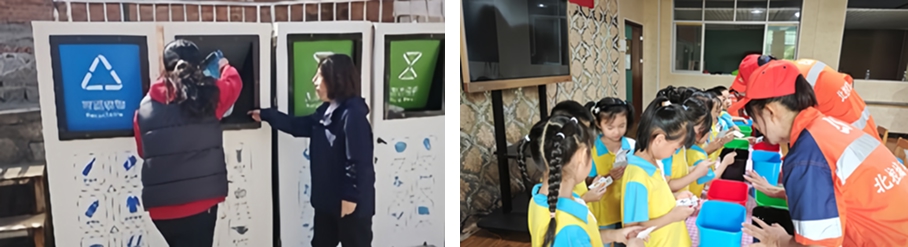
In 2024, the Group, through full participation and educational entertainment, vigorously carried out waste sorting activities, promoted the beautification of the community environment, and contributed to building a green home.
The Group’s Zhongyan Property Management Company has organized all employees to participate in the bucket guarding work with the theme of “I take the lead in bucket guarding, and beautify the community together”. Since the activity started, we have organized 4,015 staff members, effectively improving the quality of garbage classification disposal. The Group’s Renhua project company has actively carried out garbage classification promotion activities, covering kindergartens, primary and secondary schools, and communities. In kindergartens, we guide children to correctly dispose of garbage through micro-classes, game interactions, and knowledge quizzes. In primary and secondary schools, we strengthen students’ awareness of garbage classification through PPTs, videos, and fun games. In communities, we popularize garbage classification knowledge to residents, distribute promotional materials and two-classification bins, and promote residents to develop classification habits. Through various forms of garbage classification activities throughout the year, we aim to enhance residents’ environmental awareness and contribute to building a green home.
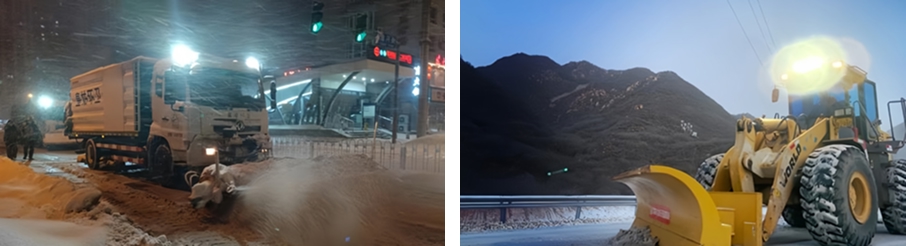
In 2024, facing the challenge of extreme weather, the Group responded quickly, efficiently carrying out emergency support work to ensure urban safety and the smooth flow of citizens’ travel.
• Cold rain and snow freezing weather:
In the Xiuwen, Dali and Linyao projects, the Group immediately activated contingency plans and adopted a mode of “machine based, manual support and man-machine integration” to comprehensively clear snow from the roads. The Xiuwen project dispatched three emergency vehicles, allocated shovels, snow-melting agents and other materials, and organized staff to fully engage in snow removal operations, ensuring that “roads are passable during snowfall and cleared after the snow stops” to ensure the safe and stable operation of the urban area. The Dali Project, based on the Dali Project 2023-2024 Snow Removal and Ice Clearing Plan, focused on clearing bus stops, hospitals, supermarkets, schools and other areas to ensure road safety and smoothness. The Linyao Project ensured the smooth flow of the city’s main roads and key areas through mechanical snow removal and the application of thawing agents.
• Typhoon weather:
At the Xinhui project in Southern China region, the Group pre-deployed and adopted a scientific wind defense strategy to ensure urban safety. The sanitation and park departments jointly cleared and unblocked urban drainage outlets and channels, trimmed and strengthened tall trees, and eliminated potential safety hazards. In September 2024, as Typhoon “Mojie” approached, we initiated the emergency plan 10 days in advance, conducted safety inspections, strengthened emergency material reserves, and organized emergency rescue teams. After the typhoon landed, sanitation workers cleared debris on the road, and garden workers dealt with fallen trees, quickly restoring urban order.

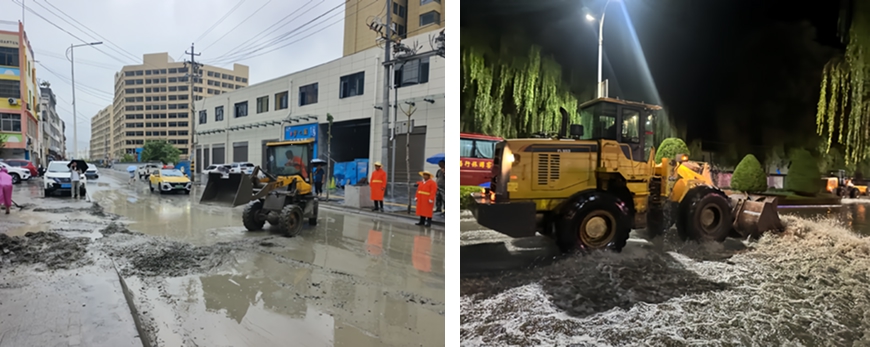
• Heavy rain weather:
In the northwestern region, facing severe storms, the Group quickly initiated the emergency mechanism to ensure citizens’ smooth travel. The Longnan project arranged for 300 sanitation workers to be on duty, using a “mechanical + manual” model to stage-clear road surface waterlogging, mud, and garbage, utilizing loaders, sweeping vehicles, and other equipment for efficient operations, and conducting special unblocking of drainage outlets. After the sudden attack of heavy rain and hail, the Linyao project organized over 400 sanitation workers to carry out cleaning work in the rain, and jointly deployed sludge removal vehicles, loaders, and other machinery, clearing 42 tons of tree branches and leaves in just 3 hours to restore road traffic, and restored the smooth flow of traffic on the road.
The Group actively promotes the application of green energy and clean technology, contributes to the implementation of “dual carbon” goals through innovative practices, and works towards sustainable development.
• Large-scale application of new energy vehicles:
In all projects in Shenzhen, we have comprehensively selected new energy cleaning vehicles to achieve green and low-carbon cleaning operations. Through technologies such as mobile 5G, AI, the Internet, the Internet of Things, big data, and cloud computing, we achieve real-time management and monitoring of people, vehicles, things, and events throughout the process, explore cooperative operation models, refine the cleaning operation process, and promote the efficient transformation of cleaning services. By the end of 2024, 80% of the fuel tank-based detachable garbage trucks in the project companies in Shenzhen have been replaced with LNG vehicles.
• Refiner burner modification:
In the Zigong project, we significantly reduced fuel consumption costs by modifying the incinerator’s burners to use natural gas instead of diesel. After combustion, natural gas primarily produces carbon dioxide and water, emitting almost no sulfur compounds, nitrogen oxides, or particulate matter, thereby significantly reducing environmental pollution, in line with the national clean energy policy and environmental protection standards. Moreover, as natural gas combustion leaves no residues, it reduces issues of nozzle clogging and equipment corrosion, extending the lifespan of the equipment and further lowering maintenance costs.
• The deployment of energy storage devices:
In the Xuzhou Pingfu project, we achieved optimized utilization of electricity resources through the introduction of energy storage devices. This facility charges during low electricity demand periods and discharges during peak times, effectively balancing the power grid load and significantly reducing electricity consumption costs. Additionally, the energy storage device provides backup power during grid fluctuations or failures, ensuring the continuity of project operations. Through this measure, the project has reduced its reliance on conventional energy sources, further lowering carbon emissions, and providing a practical example for green and low-
In 2025, the Group’s Shandong Pingfu Project subsidiary deepened its resource recovery strategy by commissioning Phase I of its resource recovery project for sludge and copper-containing hazardous waste. With a total designed treatment capacity of 10,000 metric tons per year, the project leverages mature copper extraction technology to efficiently recover and refine copper-containing hazardous waste, converting it into sponge copper products and achieving both the harmless disposal and resource recovery of hazardous waste. By 2025, the project had cumulatively received and disposed of 5,235 tons of various copper-containing hazardous wastes in compliance with regulations. Through core extraction processes, it ultimately produced 426 tons of sponge copper, which entered the downstream metal refining cycle. The Group continues to ensure the project’s safe, environmentally sound operation and maximized benefits through stable process control and continuous technological adaptation.